Greek Lemon Potatoes
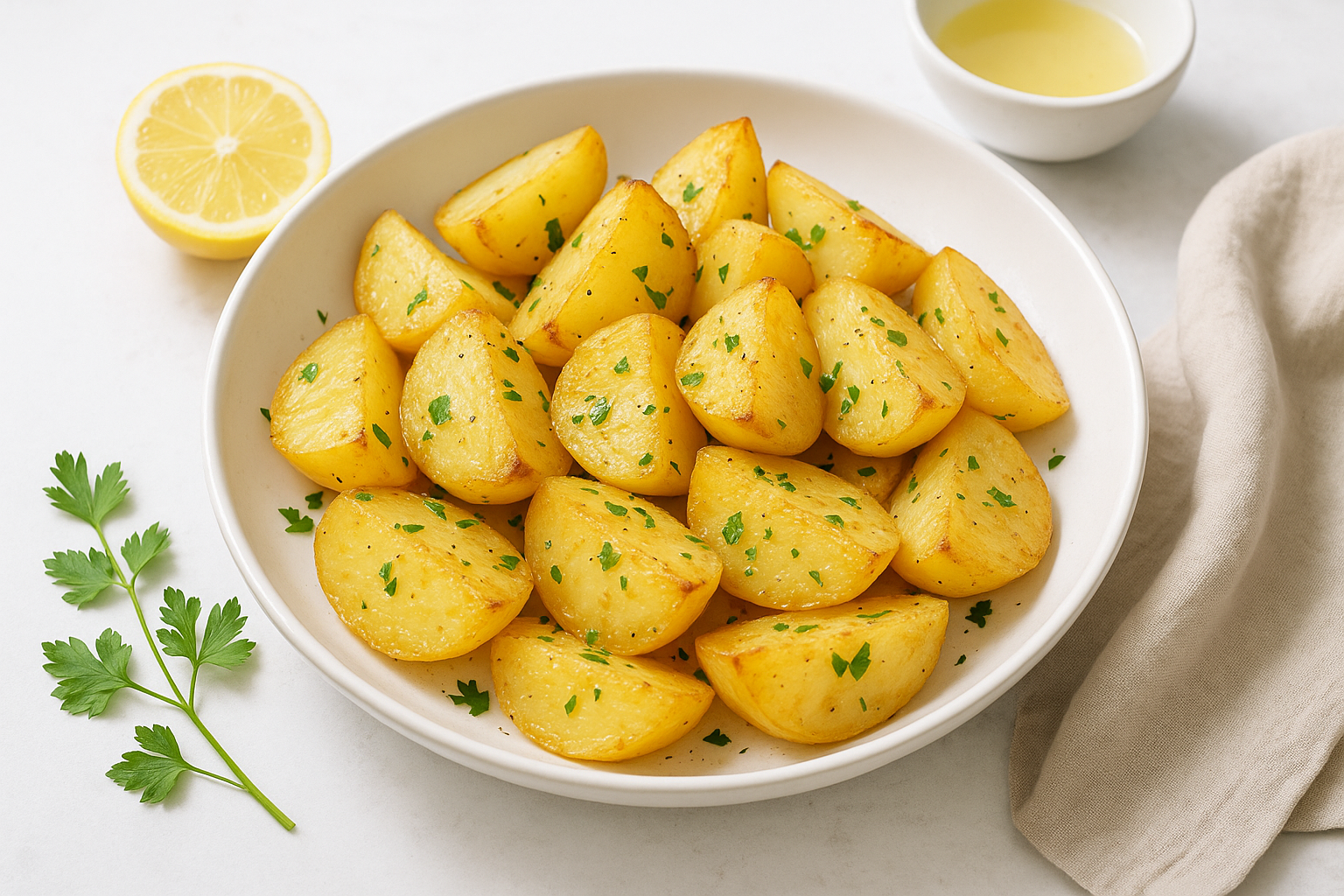
Greek lemon potatoes boiled until fully tender, then cut, coated with fresh lemon and seasoning, and baked until crisp and golden.
Greek lemon potatoes are at their best when the inside is fully tender before they ever go into the oven. This version starts by boiling the potatoes until completely cooked, then draining and cutting them before they are roasted with fresh lemon, olive oil, garlic, and oregano.
That method gives you exactly what you want: soft, creamy potato centers with crisp, browned edges. The lemon goes onto the potatoes after they are cut, so it coats the exposed surfaces instead of disappearing into a pot of boiling water.
Why You’ll Love These Greek Lemon Potatoes
- The potatoes are fully cooked before roasting, so the centers stay creamy.
- Fresh lemon juice coats the cut surfaces for brighter flavor.
- Garlic, oregano, olive oil, salt, and pepper create a simple Greek-inspired seasoning.
- The oven is used mainly for crisping and browning instead of cooking the potatoes from raw.
- An optional lemon-and-seasoned-oil baste gives the potatoes even more crispness and flavor.
- They are naturally vegan and easy to pair with Mediterranean-style meals.
Recipe Details
- Prep time: 15 minutes
- Boil time: 20 to 25 minutes
- Bake time: 30 to 40 minutes
- Total time: About 1 hour 10 minutes
- Yield: 6 servings
- Category: Side dish
- Cuisine: Greek-inspired
Ingredients
- 3 pounds Yukon Gold potatoes
- ⅓ cup fresh lemon juice or bottled lemon juice, divided
- ⅓ cup extra-virgin olive oil
- 5 garlic cloves, finely minced
- 2 teaspoons dried oregano
- 1 teaspoon kosher salt, plus more for the boiling water
- ½ teaspoon freshly ground black pepper
- 1 teaspoon finely grated lemon zest
- 2 tablespoons chopped fresh parsley, for serving
Ingredient Notes
Yukon Gold potatoes
Yukon Golds work especially well because they become creamy when boiled but still hold their shape once cut and roasted. Small or medium potatoes are easiest to handle after boiling.
Lemon juice
You can use freshly squeezed lemon juice or bottled lemon juice. Fresh lemon gives a brighter flavor, while bottled lemon juice is a convenient option and works well in this recipe. Because the lemon is added after the potatoes are fully cooked, either choice will coat the cut surfaces directly and give the potatoes their signature tang.
Olive oil
Extra-virgin olive oil helps the potatoes brown and gives the seasoning something to adhere to. For extra crispness, some of the lemon juice can be whisked into the seasoned oil and used for basting while the potatoes bake.
How to Make Greek Lemon Potatoes
1. Boil the potatoes until fully cooked
Place the whole potatoes in a large pot and cover them with cold water by about an inch. Salt the water generously. Bring to a boil, then reduce to a steady simmer and cook until the potatoes are completely tender when pierced with a knife, about 20 to 25 minutes depending on size.
2. Drain and let them steam dry
Drain the potatoes thoroughly in a colander. Let them sit for several minutes so excess moisture can evaporate. This drying step matters because a wet surface will steam in the oven instead of crisping.
3. Cut the cooked potatoes
Once the potatoes are cool enough to handle, cut them into halves or thick wedges. Arrange them cut-side up on a large metal baking sheet. If you want more browned surface area, use smaller wedges; if you want especially creamy centers, keep the pieces larger.
4. Pour lemon juice over the potatoes
Pour most of the fresh lemon juice evenly over the cut potatoes, making sure the exposed surfaces are coated. Let the potatoes sit for a minute or two so the lemon can soak into the warm flesh.
5. Season generously
Drizzle the potatoes with most of the olive oil, then season with the minced garlic, oregano, salt, and black pepper. Turn the pieces gently so the seasoning and oil coat all sides without breaking the potatoes apart.
6. Bake until crisp
Transfer the baking sheet to a 425°F oven and bake for 30 to 40 minutes, turning the potatoes once, until the edges are crisp and deeply golden. Because the potatoes are already fully cooked, this stage is entirely about browning and texture.
7. Baste for extra crispness
For even more crispness and lemon flavor, whisk the remaining lemon juice with the remaining olive oil and a pinch of oregano, garlic, salt, and black pepper. Brush or spoon this seasoned lemon oil over the potatoes during the last 10 to 15 minutes of baking, then return them to the oven until the edges are deeply browned.
8. Finish and serve
Remove the potatoes from the oven and finish with fresh lemon zest and chopped parsley. Taste while they are hot and add a little more salt or lemon if needed.
How to Get the Crispiest Edges
- Boil the potatoes until fully cooked before roasting.
- Drain them very well and let surface moisture evaporate.
- Cut them only after boiling so the centers stay intact and creamy.
- Use a large metal baking sheet rather than a deep casserole dish.
- Leave space between the pieces so hot air can circulate.
- Place a cut surface directly against the hot pan when possible.
- Baste with the lemon-seasoned oil near the end rather than flooding the pan with liquid.
- Give the potatoes a few extra minutes on an upper oven rack if they need more color.
Common Mistakes to Avoid
Underboiling the potatoes
The potatoes should be fully cooked before they go into the oven. If the centers are still firm, you will have to bake them much longer and the lemon and garlic can overcook before the potato interior is tender.
Skipping the steam-dry step
Water left on the surface creates steam. Give the drained potatoes a few minutes to dry before cutting and seasoning them.
Adding too much liquid to the baking sheet
The lemon should coat the potatoes, not pool deeply around them. Too much liquid works against crispness.
Handling the potatoes too aggressively
Fully boiled potatoes are tender. Turn and season them gently so you keep distinct pieces with plenty of exposed edges for browning.
Adding all the lemon oil at once
If you want very crisp potatoes, reserve some lemon juice and seasoned oil for basting near the end. This gives you fresh lemon flavor without soaking the potatoes during the entire bake.
Variations
Extra-garlicky
Add two additional minced garlic cloves to the olive oil before seasoning the potatoes.
Herb-forward
Add dried thyme with the oregano or finish the potatoes with fresh dill along with the parsley.
Spicy lemon potatoes
Add ¼ teaspoon crushed red pepper flakes to the seasoned oil before basting.
Extra-lemony
Add a final squeeze of fresh lemon just before serving, after the potatoes have already crisped in the oven.
What to Serve with Greek Lemon Potatoes
- Greek salad with tomatoes, cucumbers, olives, and feta
- Hummus and warm pita
- Roasted vegetables
- Grilled chicken or fish
- Lentil salad
- Tzatziki
- Roasted chickpeas
Storage and Reheating
Store leftover potatoes in an airtight container in the refrigerator for up to four days. Reheat them on a baking sheet at 400°F until hot and crisp again. An air fryer also works well. Avoid adding extra lemon juice until the end of reheating so the potatoes can crisp first.
Frequently Asked Questions
Do you boil Greek lemon potatoes before baking?
In this recipe, yes. Boiling them until fully cooked creates a creamy interior, and the oven is then used to brown and crisp the cut surfaces.
Should I cut the potatoes before or after boiling?
Cut them after boiling. Keeping them whole while they cook helps them stay intact and gives you a soft center that can be cut into thick pieces before roasting.
Why are my Greek lemon potatoes not crispy?
The most common reasons are too much surface moisture, too much liquid on the baking sheet, overcrowding, or not enough high-heat roasting time. Drain well, leave space between the pieces, and use the lemon-seasoned oil as a light baste instead of a bath.
When should I add the lemon juice?
Add the lemon juice after the potatoes are boiled, drained, and cut. Pour it over the exposed potato surfaces before seasoning and roasting.
How do I make them extra crispy?
Mix a little lemon juice with seasoned olive oil and baste the potatoes during the last 10 to 15 minutes of baking. This adds flavor while still allowing the surface to brown.
Can I make Greek lemon potatoes ahead of time?
Yes. Boil the potatoes in advance, cool them, and refrigerate. When ready to serve, cut, lemon, season, and roast until crisp.
Can I use bottled lemon juice?
Yes. You can use fresh lemon juice or bottled lemon juice. Fresh lemon tastes a little brighter, but bottled lemon juice works well and is perfectly fine for this recipe.
Do Greek lemon potatoes need to be peeled?
No. Thin-skinned Yukon Gold potatoes can be boiled and roasted with the skins on. Scrub them thoroughly before cooking.
Creamy Inside, Crisp Outside, Bright with Lemon
The key to this version of Greek lemon potatoes is separating the cooking from the crisping. Boil the potatoes until they are fully tender first. Then drain, cut, coat them with lemon, season them generously, and let the oven create those browned, crisp edges.
For an even crisper finish, baste the potatoes near the end with a mixture of lemon juice and seasoned olive oil. Serve them hot with your favorite Mediterranean-style meal, and browse more recipes from The Nutrient.