The Best Roasted Butternut Squash Soup with Peppers and Apple
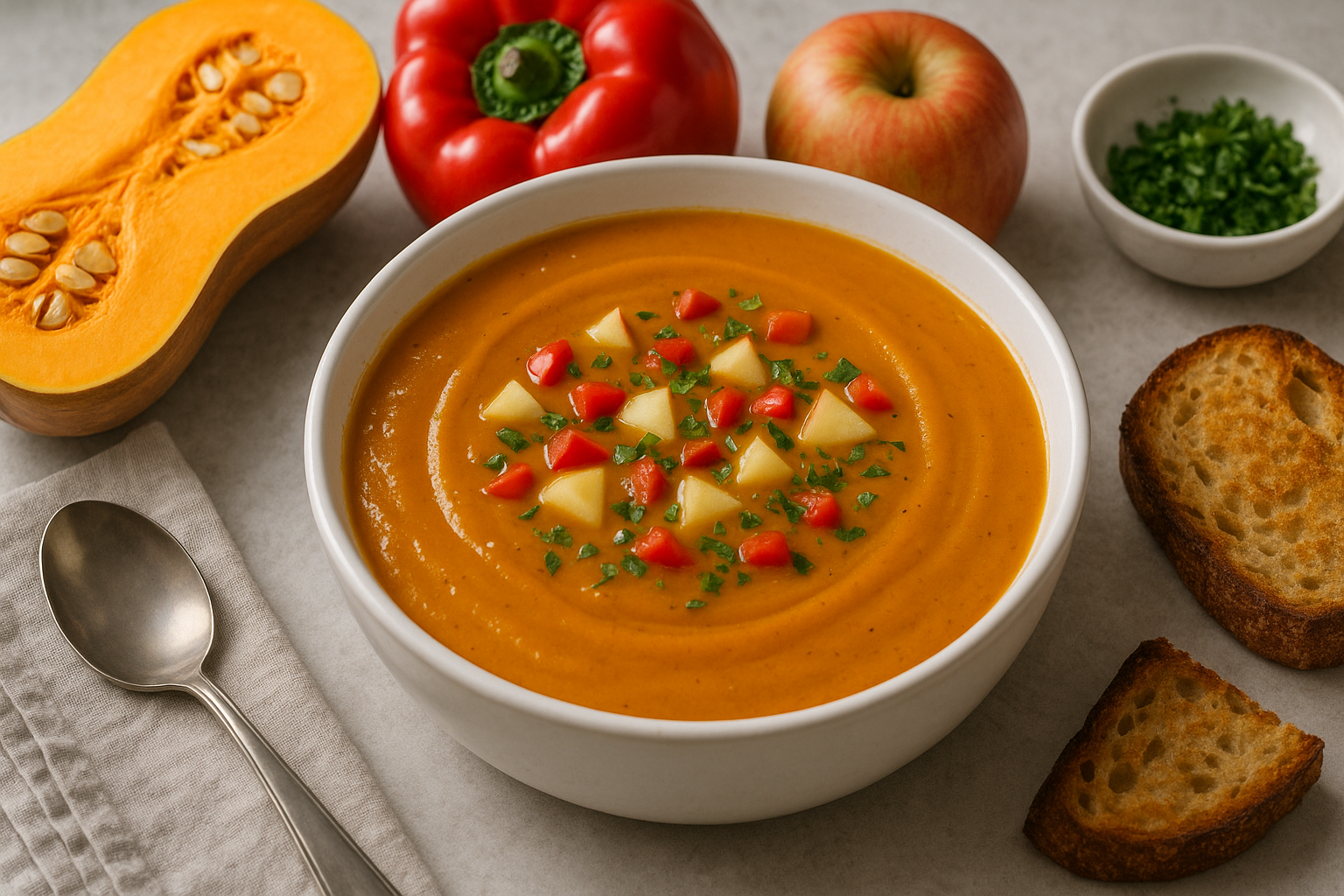
A silky, vegan roasted butternut squash soup with peppers and apple, perfect for autumn.
There is something deeply comforting about turning freshly harvested vegetables into a warm, homemade roasted butternut squash soup on a cold day. The colors, aromas, and natural flavors make the kitchen feel warmer before the first bowl is even served.
This recipe starts with a tray of roasted vegetables and fruit. Sweet butternut squash, red and yellow peppers, onion, garlic, and a tart Granny Smith apple roast until tender and lightly caramelized. Once blended with warm herbs, vegetable broth, and your favorite plant-based milk, they become a silky, nourishing soup that tastes like the best of the autumn harvest in every spoonful.
Why You’ll Love This Roasted Butternut Squash Soup
- Roasting develops a richer, deeper flavor.
- Red and yellow peppers add color and natural sweetness.
- Granny Smith apple brings a fresh, slightly tart contrast.
- Roasted garlic turns mellow and fragrant.
- You can use whichever plant-based milk you prefer.
- The soup is naturally vegan, dairy-free, and gluten-free.
- It stores and reheats beautifully.
Recipe Details
- Preparation time: 15 minutes
- Cooking time: 55 minutes
- Total time: 1 hour 10 minutes
- Yield: Approximately 6 servings
- Category: Soup
- Diet: Vegan, vegetarian, dairy-free and gluten-free
Ingredients
- 1 large butternut squash, approximately 3 pounds
- 1 whole red bell pepper
- 1 whole yellow bell pepper
- 1 whole Granny Smith apple
- 1 medium yellow onion
- 4 garlic cloves, left unpeeled
- 2 tablespoons extra-virgin olive oil
- 1 tablespoon freshly grated ginger
- 1 teaspoon fresh thyme leaves
- ½ teaspoon rubbed sage
- ¼ teaspoon ground nutmeg
- 4 cups low-sodium vegetable broth, plus more if needed
- ½ cup unsweetened plant-based milk
- ½ teaspoon sugar
- ¼ teaspoon salt
- ¼ teaspoon freshly ground black pepper
- 1 teaspoon apple cider vinegar
Optional Garnishes
- Toasted pumpkin seeds
- Fresh thyme or sage
- A swirl of plant-based milk
- Freshly ground black pepper
- Chili oil
- Homemade croutons
How to Make Butternut Squash Soup
1. Prepare the squash
Preheat the oven to 425°F and line a large baking sheet with parchment paper. Carefully slice the butternut squash in half lengthwise and scoop out the seeds. Brush the cut surfaces with some olive oil and place the squash cut-side down on the pan. There is no need to peel or cube it because the flesh scoops easily away from the skin after roasting.
2. Prepare the peppers, onion, garlic and apple
Remove stems and seeds from the red and yellow peppers, then cut each into several large pieces. Peel the onion and cut into quarters. Core the Granny Smith apple and cut into large wedges; you can leave the peel on because it softens during roasting. Arrange the peppers, onion, apple, and unpeeled garlic cloves around the squash, then drizzle with the remaining olive oil.
3. Roast everything until tender
Place the baking sheet in the oven and roast for approximately 25 minutes. Check the smaller ingredients first and remove the apple, garlic, onion, and peppers once they are tender and beginning to caramelize. Depending on size, some pieces may be ready a few minutes before others. Meanwhile, let the squash continue roasting for another 15 to 25 minutes. It is ready when a fork slides easily into the thickest part. Allow everything to cool for a few minutes, scoop the squash flesh away from the skin, and gently squeeze the softened garlic from its peel.
4. Bring the flavors together
Place the roasted squash, red and yellow peppers, onion, apple, and garlic in a large soup pot. Add the ginger, thyme, sage, nutmeg, vegetable broth, sugar, salt, and black pepper. Bring to a gentle simmer over medium heat. Then lower the heat and let it cook for about 10 minutes so the flavors can meld.
5. Blend until silky
Remove the pot from the heat and use an immersion blender to purée the soup until smooth. If you prefer, use a countertop blender and work in small batches. However, allow the soup to cool slightly first. Hot soup creates steam and pressure, so do not overfill or tightly seal the blender container.
6. Add the finishing touches
Stir in the plant-based milk and apple cider vinegar. Warm the soup gently over low heat without bringing it to a hard boil. If the soup seems too thick, add a bit more vegetable broth until it reaches the consistency you like. Taste and adjust seasoning. The vinegar should brighten the roasted flavors and balance sweetness.
Choosing Your Plant-Based Milk
- Oat milk gives the soup a smooth, mild finish.
- Cashew milk creates an especially creamy texture.
- Almond milk keeps the soup light.
- Soy milk adds creaminess and a little more plant protein.
- Coconut milk makes a richer, slightly sweeter variation.
Whichever one you choose, make sure it is plain and unsweetened.
Coconut Milk Variation
For a richer version, replace the plant-based milk with ½ cup of full-fat coconut milk. Coconut milk pairs well with ginger and roasted peppers. You can also add ½ teaspoon mild curry powder or ground cumin with the other seasonings. Finish the soup with a squeeze of fresh lime juice and a few drops of chili oil.
Helpful Recipe Tips
Let the vegetables caramelize
A little browning around the edges creates deeper, more interesting flavor. Let the vegetables roast until tender and lightly caramelized, but remove them before the edges burn.
Roast the squash until completely soft
Do not rush this step. The squash should be very tender when it leaves the oven. Thorough roasting makes it sweeter and easier to blend.
Begin with four cups of broth
Butternut squash varies in size and moisture, so start with four cups of broth and add more after blending if you prefer a thinner soup.
Use unsweetened plant-based milk
Flavored or sweetened milk can overwhelm the balance. Plain, unsweetened milk lets the roasted vegetables remain the focus.
What to Serve with Butternut Squash Soup
- Warm sourdough bread
- Garlic and herb breadsticks
- A kale and apple salad
- Crispy roasted chickpeas
- A grilled vegetable sandwich
- A simple quinoa salad
- Roasted Brussels sprouts
For a beautiful presentation, finish each bowl with toasted pumpkin seeds, a swirl of plant-based milk, and a few fresh thyme leaves.
How to Store It
Allow the soup to cool before transferring it to an airtight container. Then refrigerate or freeze according to these guidelines.
- Refrigerator: Store for up to four days.
- Freezer: Freeze for up to three months.
- Reheating: Warm gently on the stovetop, stirring occasionally.
The soup will thicken as it sits. Therefore, stir in a splash of vegetable broth or plant-based milk while reheating if needed.
Frequently Asked Questions
Do I need to peel the butternut squash?
No. Roasting the squash in its skin makes prep easier. Once tender, simply scoop out the flesh.
Can I use precut butternut squash?
Yes. Use about 2 pounds of peeled squash cubes. Toss them with olive oil and roast at 425°F for 25 to 35 minutes, turning once during cooking.
Can I leave the peel on the apple?
Yes. The peel softens during roasting and blends easily into the finished soup.
Which plant-based milk works best?
Oat milk is an all-purpose option because it has a mild flavor and smooth texture. Cashew milk is best if you want an especially creamy finish. Coconut milk works well for a richer variation.
Can I make the soup ahead of time?
Yes. The flavors continue to develop as the soup rests, so this is a great make-ahead recipe. Prepare it one or two days before serving and reheat gently.
Can I freeze butternut squash soup?
Yes. Let the soup cool completely, then transfer it to freezer-safe containers and leave room for expansion. Thaw overnight in the refrigerator before reheating.
A Warm Taste of the Harvest
This roasted butternut squash soup captures what is so comforting about cooking during the colder months. A handful of freshly harvested vegetables, a crisp apple, and a few simple seasonings become something warm, colorful, and nourishing.
Serve it steaming hot with good bread, add the garnishes you like, and enjoy the cozy aroma filling the kitchen. For more seasonal recipes and ideas, visit The Nutrient.